Home Organization for Neurodivergent Adults Through an OT Lens
I can’t tell you how many times someone has said to me, “I did everything the video said. I bought the bins. I followed the steps. And now it’s a mess again.”
There’s usually frustration in that moment. Sometimes shame.
What I gently explain is this: most organizing advice is built around how neurotypical brains tend to function. It assumes you’ll remember where things are once they’re put away. That if something is stored out of sight, you’ll still think about it. That decision-making doesn’t drain you.
But neurodivergent brains often work differently.
If you have ADHD, autism, or other executive function differences, “out of sight” can really mean forgotten. Too many steps can stall you out. Too many visual decisions can feel overwhelming instead of motivating.
So when a system falls apart after a few weeks, that doesn’t automatically mean you didn’t try hard enough. It might just mean the system was designed for a different kind of brain.
Let's talk about why. And more importantly, what works.
Why Standard Organizing Systems Don't Work for Neurodivergent Brains

Here’s what most standard organizing systems assume:
That you’ll remember where something is once it’s put away.
That you’ll put it back in the same place every time.
That visual clutter is just an eyesore, not something that can overload your nervous system.
That making dozens of small decisions in a row won’t wear you out.
That motivation is something you can just push through.
Those assumptions tend to match how many neurotypical brains function.
But that’s not how every brain functions.
With ADHD, working memory differences mean that when something goes into a closed cabinet or opaque bin, it can fade from awareness. Clients will tell me, “If I can’t see it, I forget I own it.” That’s not about carelessness, it’s about how information is tracked and retrieved. When you add differences in dopamine regulation, even a few extra steps, like opening a lid or sorting through a drawer, can be enough friction to stall the whole system.
With autism, predictability and sensory input matter deeply. A visually busy space can feel physically uncomfortable. And open-ended advice like “just keep what brings you joy” can feel impossible when decision-making itself is tiring or overwhelming.
When we look at it through that lens, it makes sense that many standard systems fall apart after a few weeks.
That’s why I don’t begin with matching containers or labels. I begin by understanding how your brain handles memory, sensory input, routines, and energy throughout the day. As an occupational therapist, I’m paying attention to where things pile up, when you lose momentum, and what feels harder than it seems like it should. Then we build from there.
What I’ve Seen Work for Neurodivergent Clients
Over time, certain patterns show up in the homes of my neurodivergent clients. When we adjust systems to account for working memory, sensory input, and energy levels, things tend to work in the long term.
Keep Important Things Visible
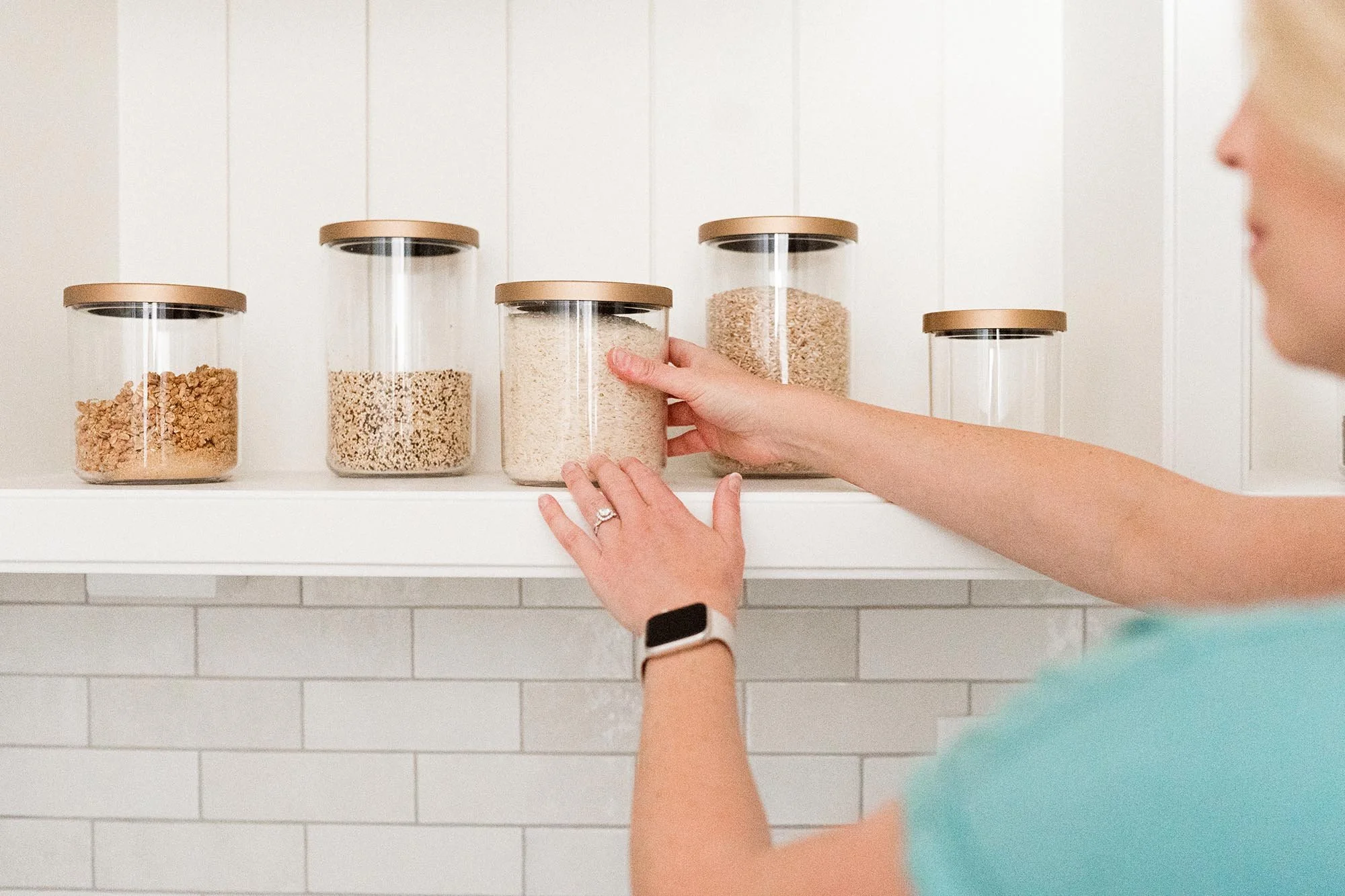
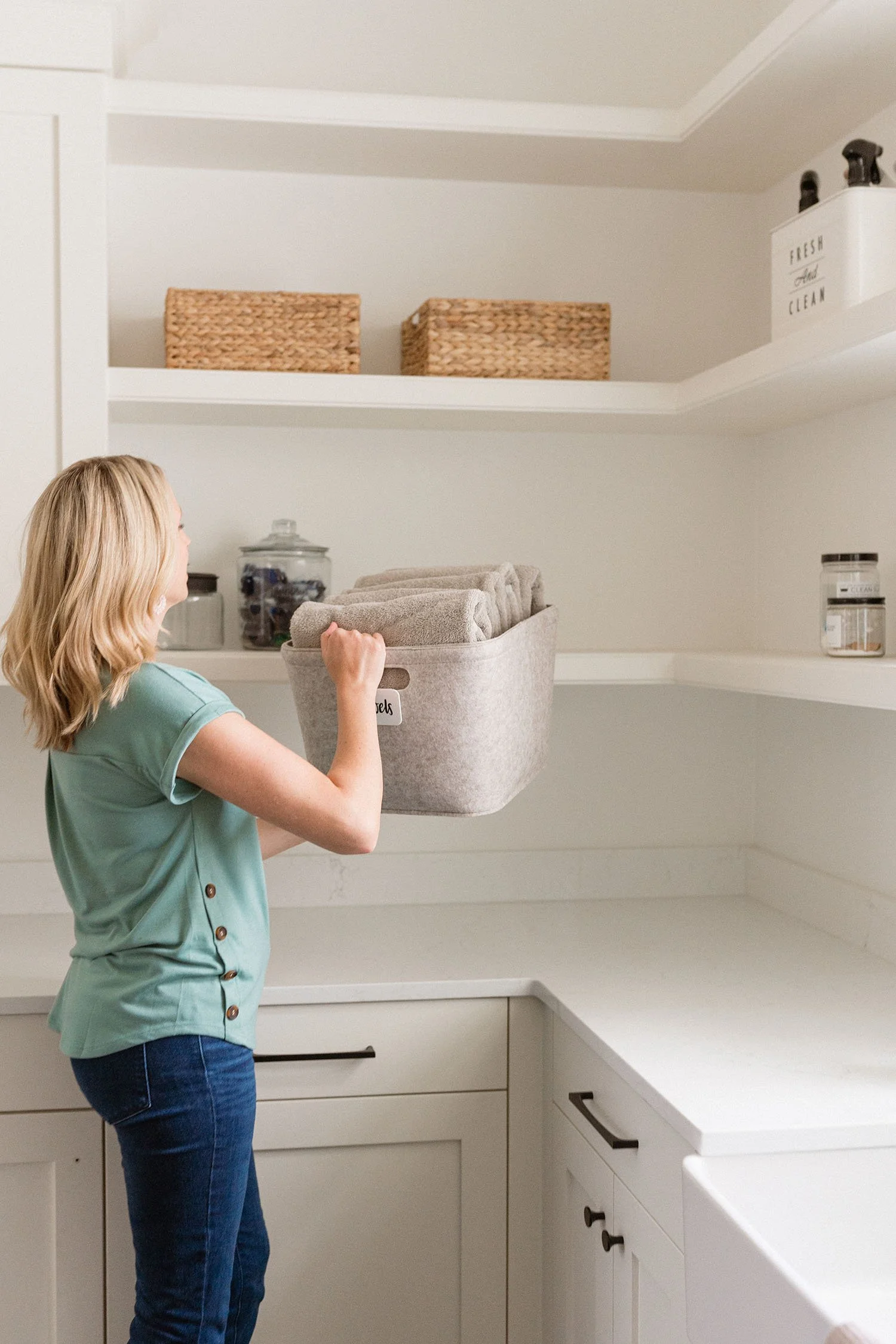
If you have ADHD, putting something into a solid bin or behind a cabinet door can make it fade from awareness. That’s why I often recommend clear containers instead of opaque ones, open shelving instead of deep cupboards, or hooks instead of stacked storage.
When you can see what you have, your brain does not have to work as hard to track it. This doesn’t mean everything needs to be out in the open, it means the things you use regularly should be easy to see and easy to reach.
Remove Small Barriers
I pay attention to how many steps it takes to put something away. If you have to: open a cabinet, move something out of the way, remove a lid, and sort through layers, that’s a lot of friction for a task that already requires initiation.
If you have laundry that piles up on the floor, move the laundry basket closer to where you undress. If you have trash piling up in a room, add a trash can to that room. If your keys and change end up scattered on the entryway table, place a tray there to create a simple drop zone right where you walk in.
These are small changes, but they reduce the number of decisions and movements required.
Work in Short Sessions
Trying to reset an entire house at once often leads to shutdown. Instead, I usually suggest setting a timer for 15 to 30 minutes. Pick one drawer or one cupboard. Empty it, declutter it, clean it, organize it, then stop there.
The next day, choose another drawer in the same room. Stay in that room until it feels complete. Then move on to a new space. Bouncing from room to room scatters your attention, making it difficult to finish tasks.
Pair Decluttering With Something That Boosts Focus
If task initiation is hard, pairing it with something stimulating can help.
Here are some ideas:
Put on music
Listen to a podcast
Stand while you sort
Dance for a few minutes in between sections
Go for a quick walk before you start.
Try not to force productivity, but rather, be aware of your sensory preferences and incorporate them into your decluttering.
Build Systems Around the Way You Live
Some systems look beautiful and photograph well, but that does not automatically mean they will hold up in your home.
When I’m working with a client, I’m paying attention to things like:
When your energy is highest
Where things naturally collect
What feels overstimulating
What tasks you tend to put off
Those patterns tell us far more than a picture of labeled bins ever could. Organizing needs to reflect how your days unfold. If it ignores your routines, your energy, or your sensory preferences, it may look good at first but it won’t work for long.
Organizing Approaches That Often Create More Stress
There are certain strategies that sound logical but tend to overwhelm many neurodivergent adults.

Starting Too Big
Trying to declutter an entire house at once can overload working memory and decision-making quickly. Sorting, evaluating, and categorizing everything in a space requires sustained attention.
A smaller starting point usually holds better. One drawer. One shelf. Finish it. Then do another space in that same room the next day. Staying contained reduces mental scatter and makes progress easier to see.
Hiding Everything to Make It Look Tidy
Closed storage can make a space look calmer. For many people with ADHD, though, when something goes out of sight it drops off the radar.
That can lead to duplicate purchases, unfinished systems, or items left out because putting them away feels like losing track of them. Clear containers or visible storage for frequently used items often supports consistency more effectively.
Using Rigid Rules
Rules like “declutter everything before you organize” or “if you haven’t used it in a year, donate it” can create shutdown.
When you’re already overwhelmed, making dozens of keep-or-let-go decisions at once is exhausting. And time-based rules don’t account for sensory comfort, identity, or changing seasons of life. It’s usually more helpful to look at how something fits into your current routines and space rather than applying a blanket standard.
How Being an Occupational Therapist Shapes My Work

Because I’m an occupational therapist, I don’t start with containers or labels, I start with questions. I want to understand what your mornings look like. When your energy is highest and when it dips. Where things tend to pile up. Which systems you’ve tried before and where they break down.
We look at executive function, sensory input, routines, and transitions throughout your day. If something consistently falls apart, I’m interested in why. Is it too many steps? Too much visual input? A timing issue? A storage location that doesn’t match how you move through the space?
From there, we build something that fits the way you live.
You Don't Have to Be In Portland to Work With Me!
One of the questions I get most often is whether virtual organizing works. I wrote a whole post about this (you can read it here) but the short answer is: yes, surprisingly well.
For neurodivergent clients especially, virtual sessions offer some real advantages. You work in your own environment, at your own pace, without the additional stress of having someone physically in your home. For clients with sensory sensitivities or social anxiety, that can make a significant difference in how much they're able to engage and do.
Virtual sessions follow the same client-centered, OT-informed approach as in-person sessions. You show me the space on Zoom, we work through it together in real time, I ask the same questions, and we build systems tailored to your brain and your daily habits. The only difference is I'm on a screen instead of in the room.
Sessions are one hour, available as a single session or a discounted package of three. We will always start with a free 20-minute consultation so I can understand your space and your goals before we dive in.
Ready to build a system that works for your brain?
If you’ve tried organizing before and found that it didn’t last, it may be worth looking at how the system aligned with your brain and routines.
If you’d like to explore that together, you can book a free 20-minute consultation. We’ll talk through what’s feeling stuck, look at the space virtually, and decide what kind of support would be most helpful.

I'm Sarah, an occupational therapist and home organizer with Balanced Home Organization in Portland, Oregon.
I specialize in helping neurodivergent adults and families create organizing systems that work with their brains.
I offer virtual organizing sessions available anywhere, and in-person sessions in the Portland metro area.